Radiowave Propagation Techniques
We are interested in developing propagation prediction techniques in various environments such as Rough Surface, Indoor and Outdoor Wireless Communications, Tunnels, Uneven Terrain, Inhomogeneous atmosphere, etc. The goal is to come up with efficient methodologies to make reasonably accurate predictions.
Stochastic Methods for Wave Propagation
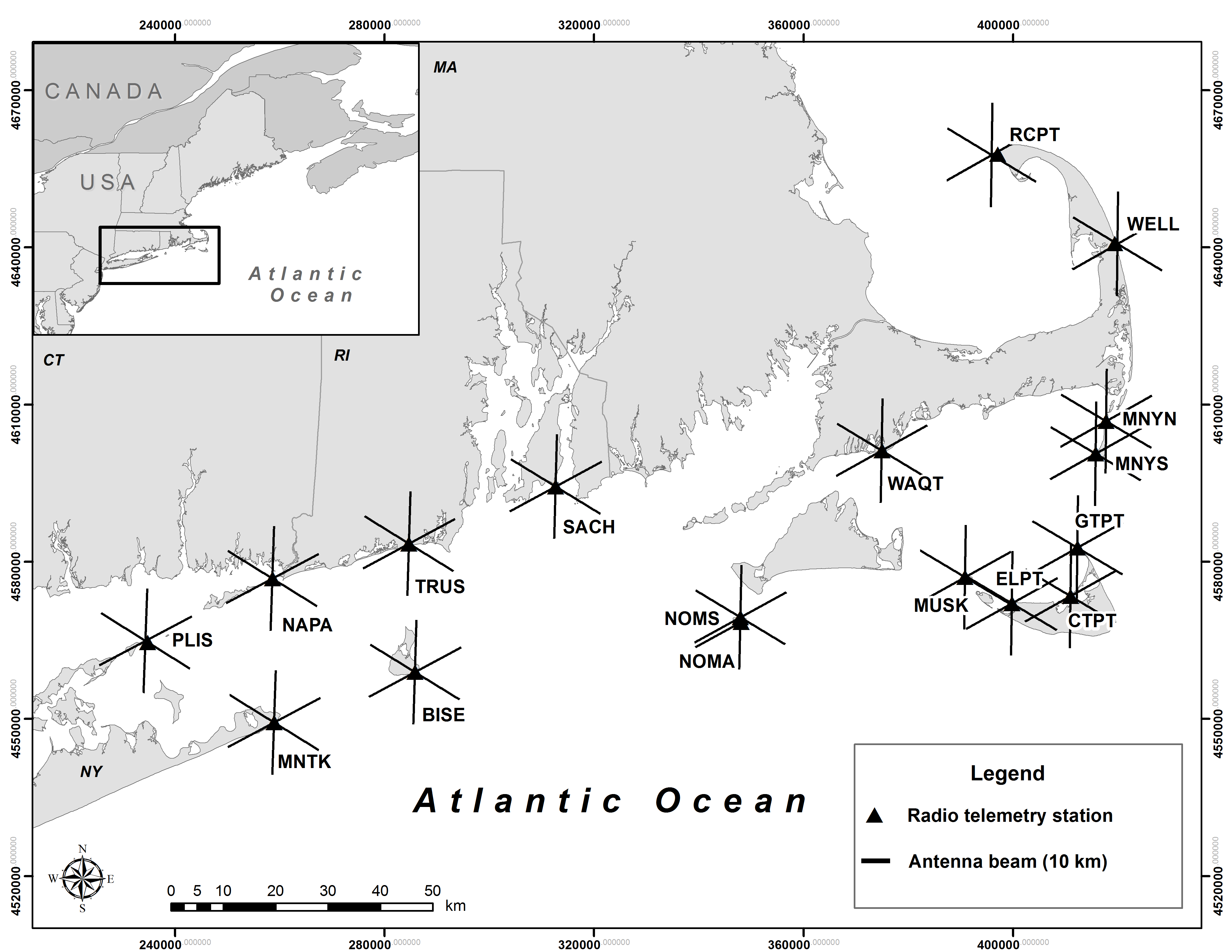
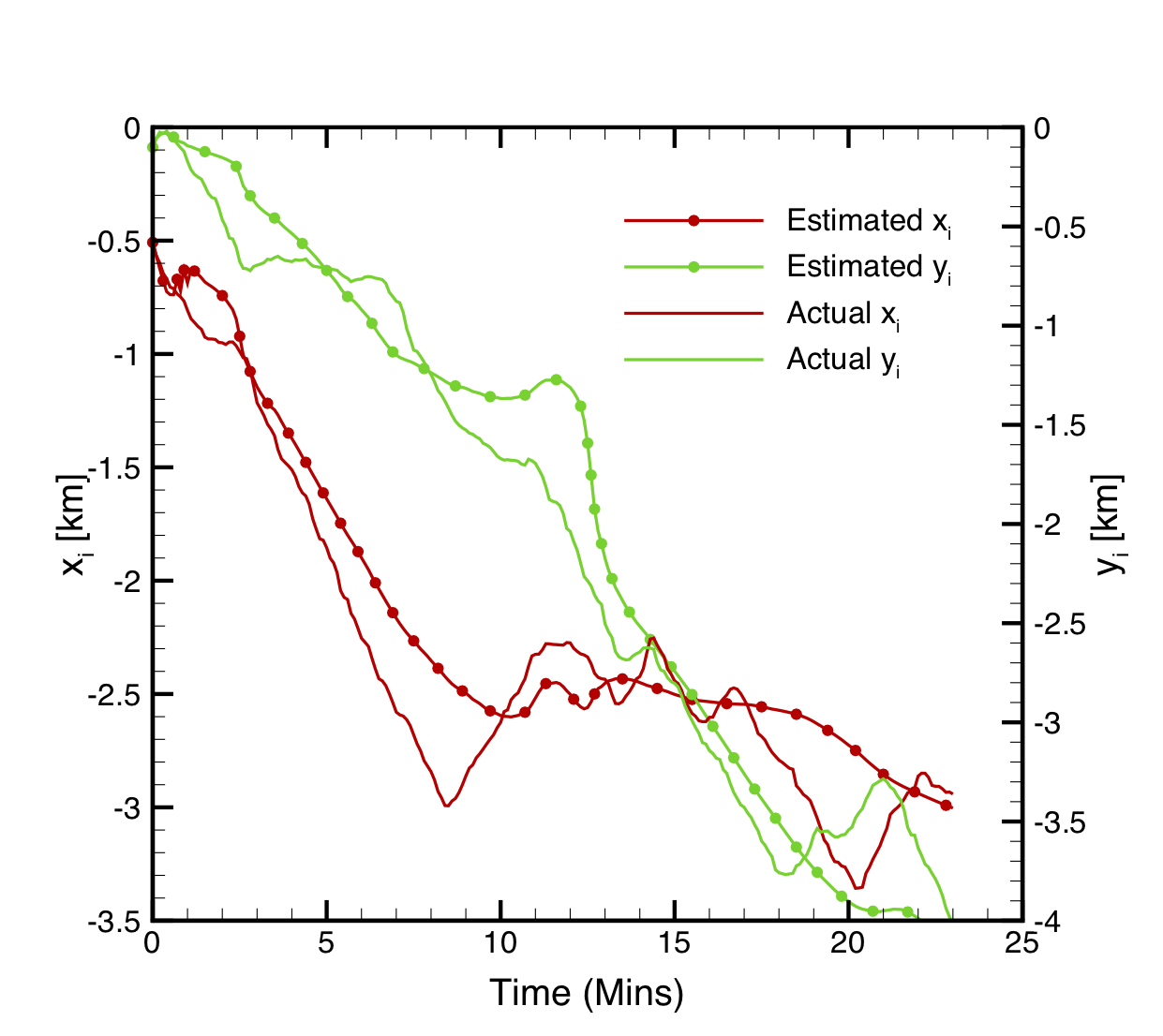
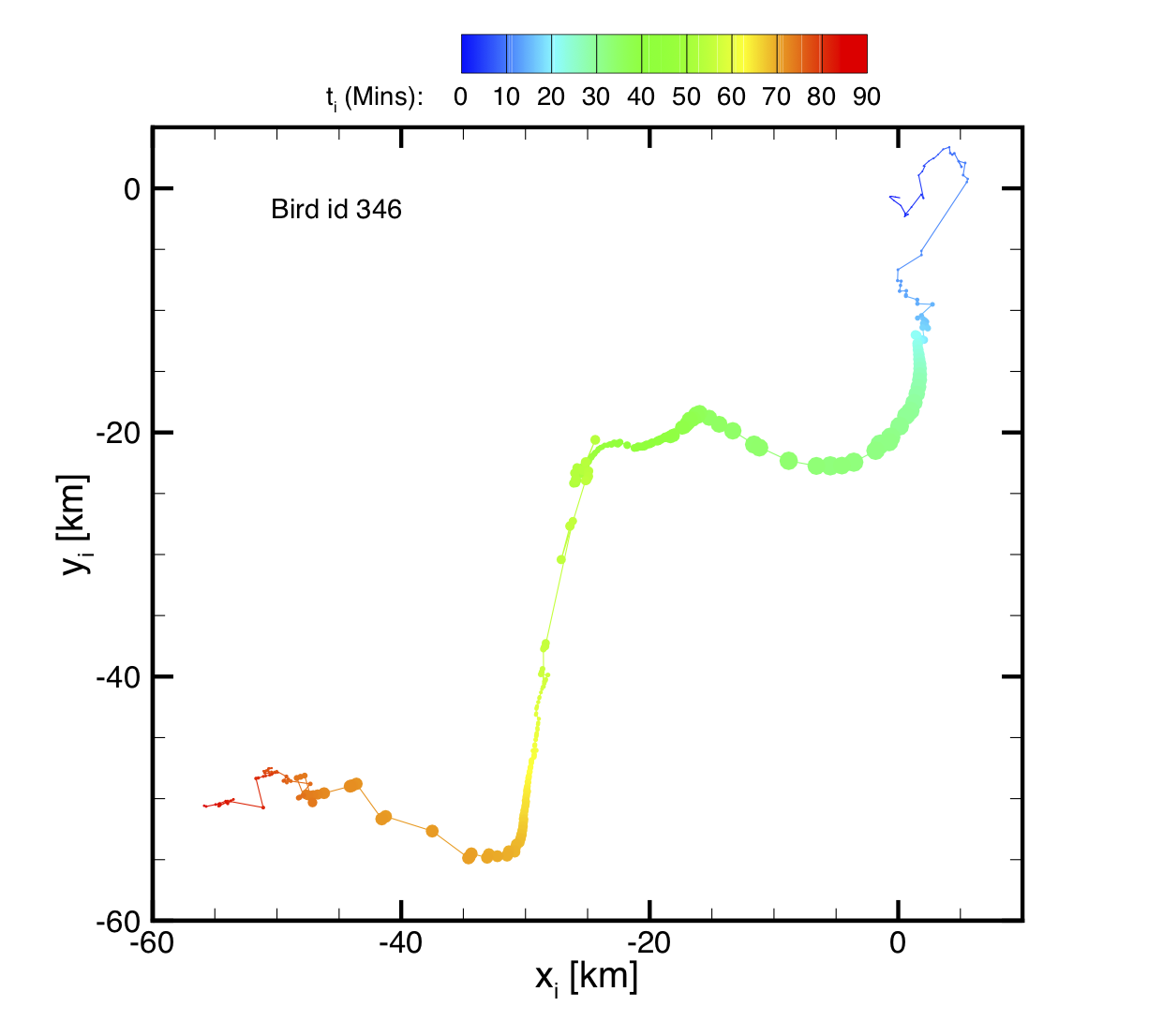
We are interested in applying stochastic methods to study wave propagation in a variety of formulations: Parabolic Wave Equation, Wave and Telegraph Equations and Material Boundaries, Absorbing Boundaries, etc. Stochastic based techniques were also utilized for estimating position coordinates using time-series of power measurements from nano-tages attached to the animal body. The pinging signal was received via various towers erected along the coastal Atlantic region, Fig. 1. A simulated trajectory and that predicted by the model are shown in Fig. 2. Some predictions based on actual measurements for a subject bird are shown in Figs. 3, 4. Observation time there is shown in the color map.

Computational and Theoretical Electromagnetics
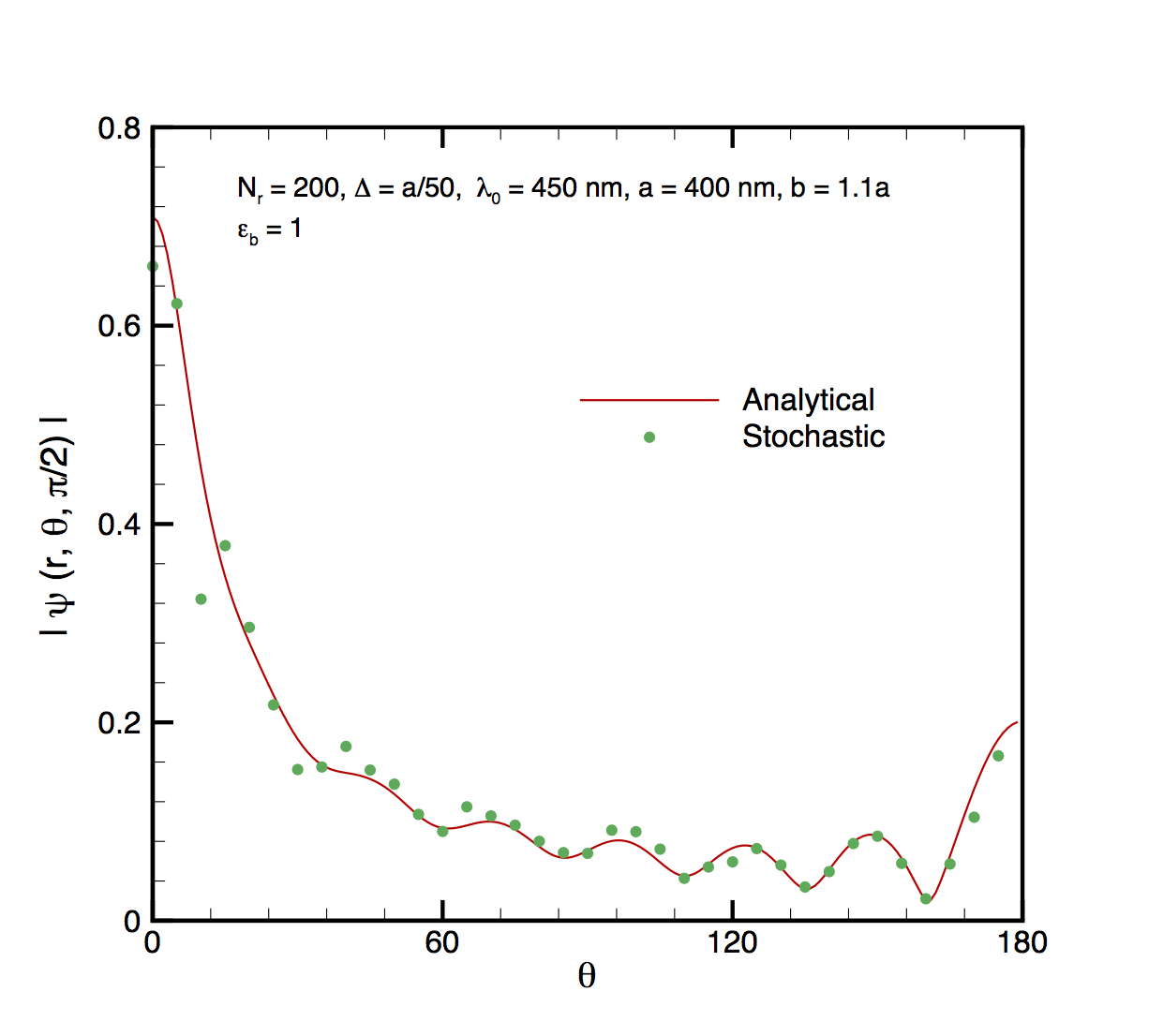
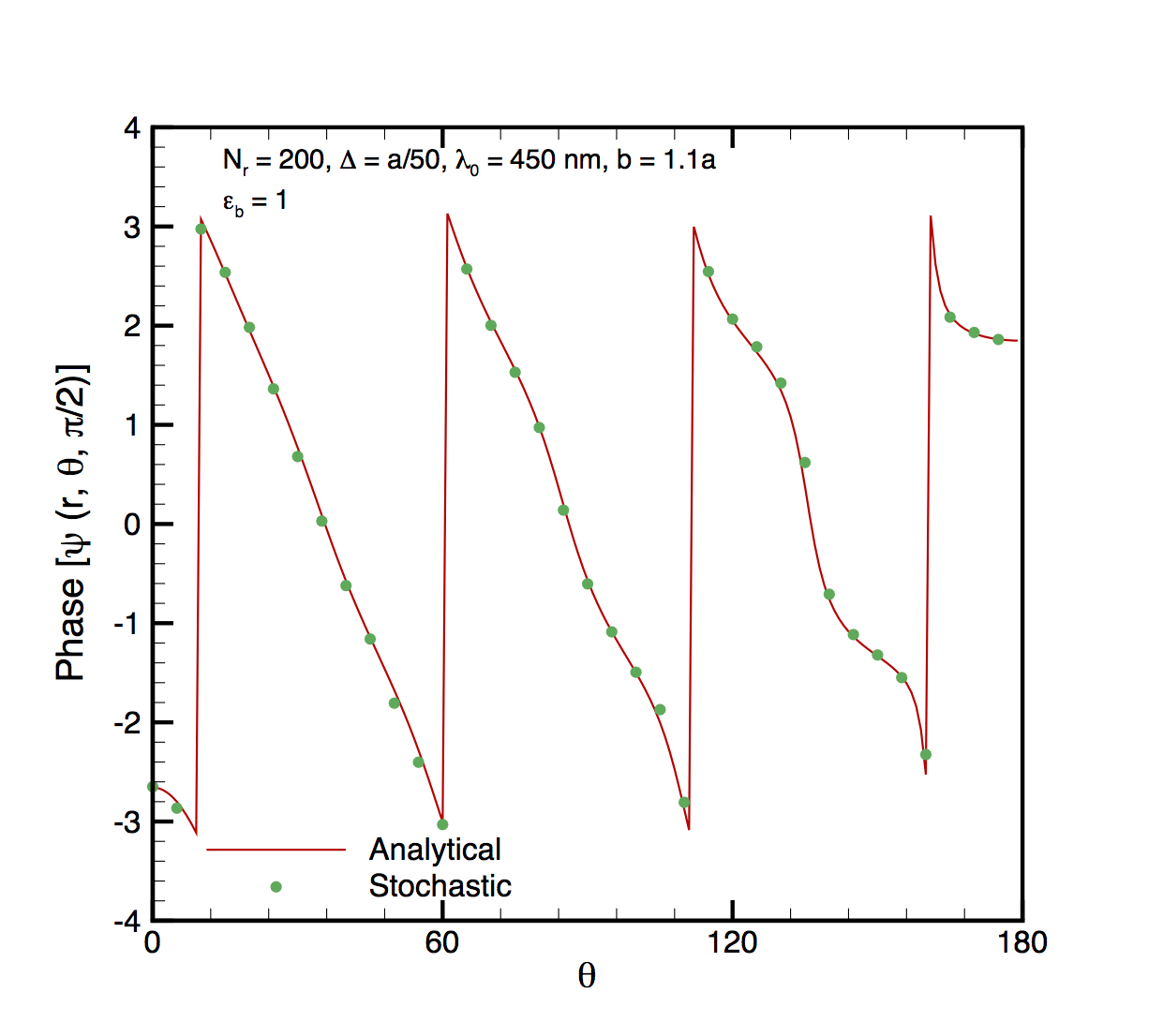
We are interested in the use of Feynman-Kac type stochastic representations in solving electromagnetic boundary value problems. Past work included the determination of electromagnetic field within plasmonic nanomaterials. The methodology allows the solution to be obtained at selected points wihtout having to compute the field globally at all interior points. Furthermore, the methodology leads to complete parallelization. Comparison is shown below between the exact solution and the solution obtained by the stochastic representation for fields inside a plasmonic nanosphere excited by an external vertical electric dipole. Excellent agreement is seen both for the magnitude and phase of the fields even with the use of only a few realizations in the stochastic representation.